
Growing up, I used to walk from my high school to my play aunt’s beauty shop a few blocks over. Her shop was filled with women laughing, hair dryers humming, and my aunt performing her seamless rotation of those iconic iron curlers, switching them out strategically as one got colder and the other got hotter. Sometimes I had an appointment. Sometimes I just sat there to be in the mix, listening to what the grown folks were talking about.
I didn’t realize I was taking a quick community checkpoint before heading back home. It was like an oral reading of the local newspaper. I needed to hear how such-and-such was doing. Who had gotten engaged. Who graduated. Who was moving out. Who was moving in. And who was moving in without being engaged (ooo, drama!).
Those quiet, graceful conversations were everyday pleasantries that seem to have gone missing in a world of AI efficiency, automation, and frankly, capitalism convincing everyone to be in a rush.
Years later, I built a nail design enrichment program, and that same beauty shop hum showed up in it. I watch it happen every week.
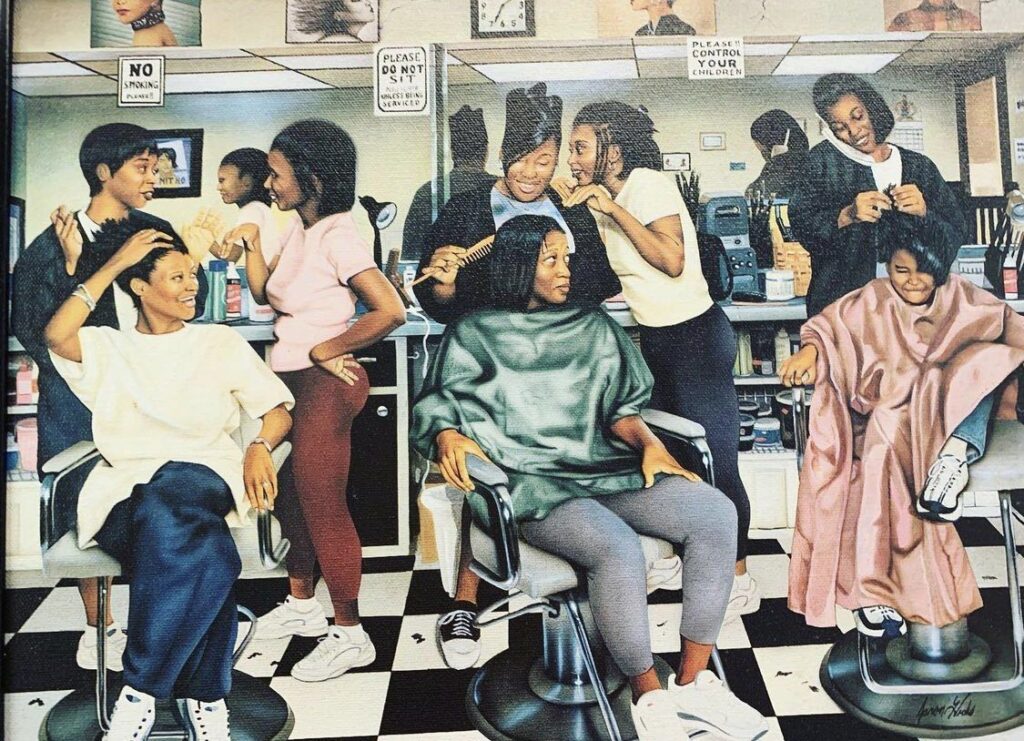
Beauty shops can create spaces where conversation, connection, and community happen naturally.
What happens when the glittery box comes out
Whenever I walk into a Chicago school with my glittery box and start unpacking supplies, the girls get real quiet and anticipate who gets to go first. Once they have their materials, they have full creative control over what they make.
And I stop being the center of attention.
In a regular classroom, there’s often a power struggle over who talks when. Here, the floor gets shared. The mic gets shared. A unified conversation opens up, and young nail artists can dip in and out of it without needing to be the loudest voice in the room, just like at the beauty shop.
The conversations look meaningless. They aren’t.
If you walked into my classroom, I don’t think these girls would even notice you. They’re that deep in their conversation and their nails.
They typically start with the surface level conversations. Who has a crush on who. And who’s the cutest in the grade. But as they settle in and open up, mentorship starts happening on its own. The older girls begin telling the younger ones what to expect from fourth grade. “Watch out for Miss Such-and-Such, she’s so nice.” “You think you have homework now? Just wait till you get to fourth grade.”
They talk about their trips, their annoying siblings, their new pets. And sometimes, very casually, they bring up traumatic things that happened in their family. Things that would stay buried if an adult sat them down and asked directly.
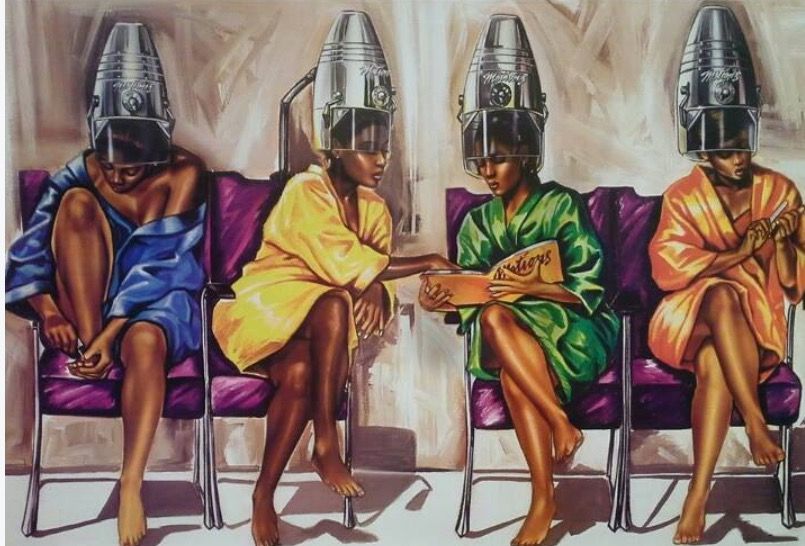
Like the beauty shop, hands-on activities can create room for students to talk, listen, and connect.
So many times as adults, when we get around a child, we immediately ask them how their day was, and receive an automatic “fine.” But when we put a low lift task in front of them, something shifts and their walls come down. In art, there’s no goal and no right answer, and that freedom carries straight into how they talk to each other.
They’re also not competing, because they all have ten totally different fingers, ten different favorite colors, ten different styles, and a few different nail shapes and preferences. Everybody is doing their own thing. The power dynamics and the boundaries that usually stay up come right down. Nobody is trying to outdo anybody.
This is the hands-on social emotional learning that organizations pay hundreds and thousands of dollars to coordinate. All it took was a tiny nail, a bunch of polish, and a few charms here and there.
What I’d ask program directors to consider
I’ve watched this happen across every grade level, at schools with every level of funding, and across socioeconomic backgrounds and races. The pattern holds true for all of them.
So before you put the chairs in a circle, before you have students color their feelings on affirmation worksheets, before you write out those deep discussion questions, ask yourself a few things:
How do I give the power and autonomy back to the students? The conversation opens up when they control the outcome.
How do I make the entry point low lift? Anyone should be able to join without prep, skill, or nerve.
How do I take the stakes out? When one person talks and everybody watches, students feel like they have a platform to perform or a platform to fail.
The real connection happens when everyone’s eyes are on something else while they listen. They comment if they feel moved to comment. They let it pass if they need to let it pass.
The shared experience is the curriculum
What these girls walk away with is a piece of art they made individually, developed inside a collective, because they were all doing it at the same time. Nobody is showing off who made the best anything. It’s whatever feels good to you.
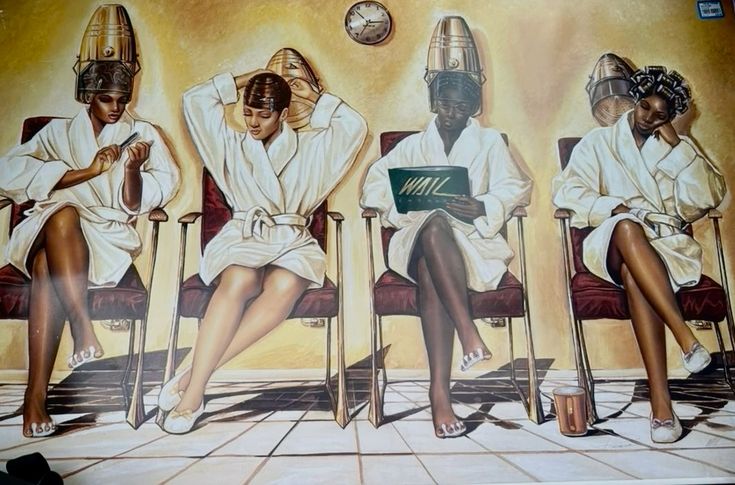
Individual creativity can become a shared experience that builds connection and belonging.
If you’re building out SEL enrichment programs in Chicago and the circle time keeps falling flat, consider what a nail design enrichment program can do with the same hour. Frame the activity that way, and the conversation will follow.

I’m Gabriell, and I’ve dedicated my career to helping struggling students improve their reading.
I created the Innovative Literacy Process and I am the owner of The Innovative Learners Tutoring Agency. With over fifteen years of tutoring and teaching, I taught over 500 students in total how to improve in reading and have a 98% success rate by implementing my Innovative Literacy Process.